
The Ultimate Chocolate Cake Guide: History, Recipe, Nutrition & Pro Tips (2026)
History, classic recipe, nutrition facts,chocolate cake popular varieties, and professional baking secrets — everything in one place.
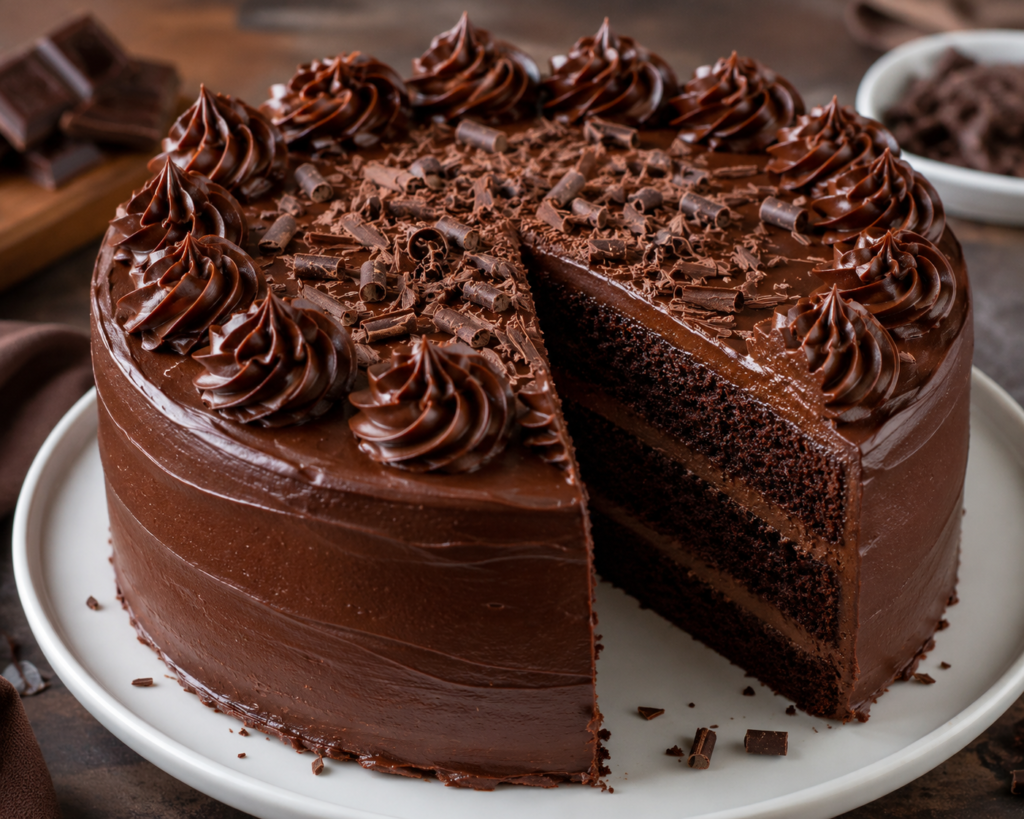
Table of Contents
- Introduction — Why Chocolate Cake Reigns Supreme
- A Brief History
- Popular Types
- Classic Chocolate Cake Recipe
- Nutrition Facts at a Glance
- Professional Baking Tips
- Frequently Asked Questions
- Conclusion
Introduction
Few desserts command the universal adoration that chocolate cake enjoys. From birthdays and weddings to quiet Tuesday evenings, a slice of moist, fudgy chocolate cake can instantly elevate any occasion. It is consistently ranked the most popular cake flavour worldwide, and for good reason — the combination of deep cocoa bitterness, tender crumb, and creamy frosting is nearly impossible to resist.
In this comprehensive guide, we explore the fascinating origins of chocolate cake, walk through the essential recipe, compare popular varieties, and share science-backed baking tips that will help you achieve a perfect result every single time.
“Chocolate cake is not merely a dessert — it is a universal language of comfort, celebration, and indulgence.”— The Baking Journal, 2025
2. A Brief History
Timeline of Chocolate Cake — 1764 to Present Key milestones in the evolution of it across three centuries.
The story of chocolate cake begins long before the modern layer cake existed. Chocolate was first consumed as a bitter beverage by the ancient Aztec and Maya civilisations of Mesoamerica, who regarded cacao as sacred. Spanish explorers brought it to Europe in the 16th century, where sugar was gradually added to sweeten it.
By the mid-18th century, the first stirrings of “chocolate cake” appeared when bakers began incorporating chocolate powder or shaved chocolate into traditional sponge batters. The pivotal year was 1764, when Harvard-educated physician James Baker established America’s first chocolate mill, making cocoa powder widely accessible.
The real breakthrough came in 1886, when American cookbooks began featuring standardised recipes. The invention of Dutch-processed cocoa by Coenraad van Houten (1828) had already neutralised cocoa’s acidity, producing a smoother, darker powder perfect for baking. In 1936, the iconic Devil’s Food Cake entered the cultural lexicon, and it has never looked back.
3. Popular Types
is not a single entity — it is a vast family of bakes, each with its own texture, richness, and technique. The table below summarises the most beloved varieties.
| Cake Type | Key Characteristic | Cocoa Content | Difficulty | Best Occasion |
|---|---|---|---|---|
| Classic Chocolate Layer Cake | Fluffy sponge with buttercream | Medium | Easy | Birthdays, everyday |
| Devil’s Food Cake | Deeply dark, super moist crumb | High | Medium | Celebrations |
| Flourless Chocolate Cake | Dense, fudgy, gluten-free | Very High | Medium | Dinner parties |
| Molten Lava Cake | Warm liquid centre | High | Hard | Romantic dinners |
| Black Forest Cake | Chocolate sponge + cherry cream | Medium | Medium | Special occasions |
| Chocolate Bundt Cake | Elegant ring shape, dense crumb | Medium–High | Easy | Gifting, brunches |
4. Classic Chocolate Cake Recipe
A classic two-layer chocolate cake with dark ganache drip — the gold standard of home baking.
Ingredients (serves 12)
| Ingredient | Quantity | Notes |
|---|---|---|
| All-purpose flour | 2 cups (250 g) | Sifted |
| Dutch-process cocoa powder | ¾ cup (75 g) | Unsweetened |
| Baking soda | 2 tsp | Fresh, not old |
| Baking powder | 1 tsp | — |
| Fine salt | ½ tsp | Balances sweetness |
| Caster sugar | 2 cups (400 g) | — |
| Large eggs | 3 | Room temperature |
| Buttermilk | 1 cup (240 ml) | Key to moistness |
| Brewed espresso (cooled) | ½ cup (120 ml) | Intensifies cocoa |
| Vegetable oil | ½ cup (120 ml) | Keeps crumb moist |
| Pure vanilla extract | 2 tsp | — |
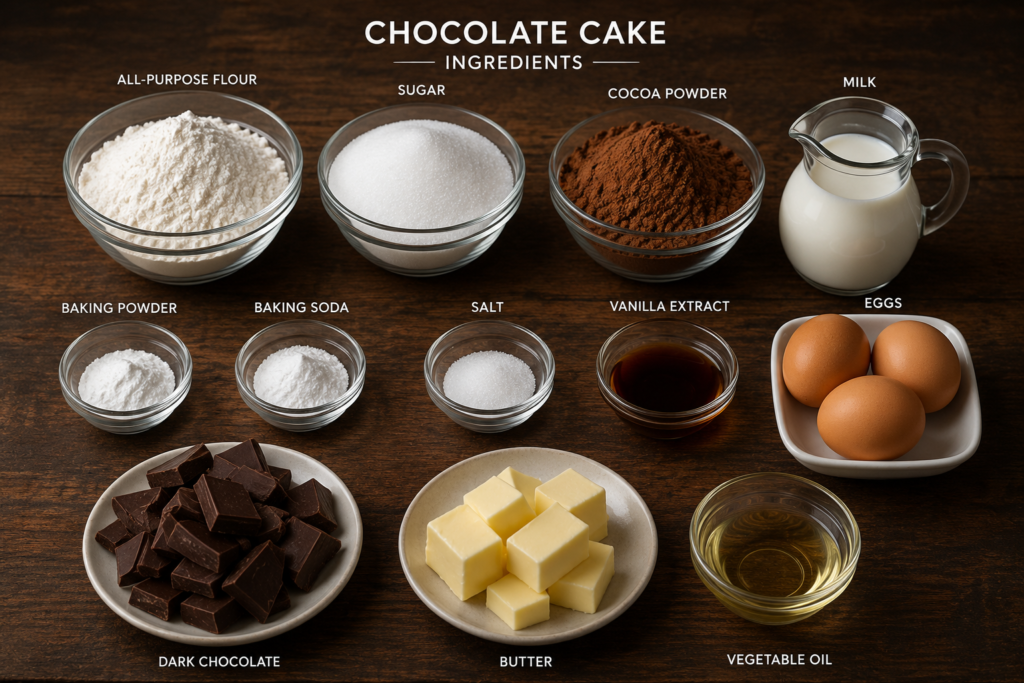
Method (Step-by-Step)
- Preheat your oven to 175 °C (350 °F). Grease and line two 9-inch round cake tins.
- Sift flour, cocoa, baking soda, baking powder, and salt together in a large bowl.
- Whisk sugar, eggs, oil, buttermilk, espresso, and vanilla in a separate bowl until fully combined.
- Fold the wet ingredients into the dry mixture, stirring only until no streaks of flour remain — do not over-mix.
- Divide the batter evenly between the two tins and bake for 32–36 minutes, until a skewer inserted in the centre comes out with only moist crumbs.
- Cool in the tin for 15 minutes, then turn out onto a wire rack. Cool completely before frosting.
- Frost with dark chocolate ganache or Swiss meringue buttercream and serve.
✦
5. Nutrition Facts at a Glance
Understanding the nutritional profile of chocolate cake can help you enjoy it mindfully. The figures below are averages for a standard slice (approximately 100 g) of classic buttercream frosting.
| Nutrient | Amount | % Daily Value* | Significance |
|---|---|---|---|
| Calories | 371 kcal | 19% | Energy source |
| Total Fat | 16 g | 21% | Mostly saturated |
| Saturated Fat | 5 g | 25% | Moderate limit advised |
| Carbohydrates | 52 g | 19% | Primary energy |
| Sugars | 36 g | — | High — enjoy in moderation |
| Dietary Fibre | 2.5 g | 9% | From cocoa solids |
| Protein | 5 g | 10% | From eggs and flour |
| Iron | 2.4 mg | 13% | Cocoa is iron-rich |
| Magnesium | 32 mg | 8% | Cacao’s natural mineral |
| Caffeine | ~22 mg | — | Naturally from cocoa |
Percent Daily Values are based on a 2,000-calorie diet. Individual needs vary.
For more baking tips and helpful guidance on baking the perfect cake, visit King Arthur Baking.
6. Professional Baking Tips
These are the same techniques professional pastry chefs rely on to ensure a flawless every time you want.
Add Espresso
A small amount of brewed coffee or espresso does not make the cake taste like coffee — it intensifies and deepens the chocolate flavour dramatically.
Use Buttermilk
The acidity of buttermilk reacts with baking soda to produce a tender, velvety crumb that plain milk simply cannot match.
Room-Temp Ingredients
Cold eggs and dairy can cause the batter to curdle. Allow all refrigerated ingredients to sit at room temperature for at least 30 minutes before use.
Do Not Over-Mix
Excess mixing develops gluten, resulting in a tough, dense cake. Fold wet and dry ingredients together just until the last streak of flour disappears.
Choose Quality Cocoa
Dutch-processed cocoa yields a darker colour and smoother flavour. For a fudgier result, use a combination of cocoa and melted dark chocolate.
Cool Completely
Frosting a warm cake will melt the icing and create a soggy layer. Patience here makes all the difference in a professional-looking finish.
7. Frequently Asked Questions
What makes chocolate cake moist?
Moisture comes from a combination of fats (oil is better than butter for this), acid (buttermilk, yogurt, or sour cream), and not over-baking. Using oil instead of butter keeps the crumb soft even when refrigerated.
Can I make chocolate cake without eggs?
Yes. Common egg substitutes include flax eggs (1 tbsp ground flaxseed + 3 tbsp water per egg), unsweetened applesauce (60 g per egg), or aquafaba (3 tbsp per egg). Each will slightly alter the texture.
How long does chocolate cake keep?
An unfrosted chocolate cake can be wrapped tightly and stored at room temperature for up to 3 days, or frozen for up to 3 months. A frosted cake should be refrigerated and consumed within 5 days.
What is the difference between Devil’s Food Cake and regular chocolate cake?
Devil’s Food Cake uses more cocoa powder, baking soda, and hot liquid, which creates a darker colour, looser batter, and an airier, more intensely chocolate crumb compared to a classic chocolate layer cake.
8. Conclusion
Chocolate cake is far more than a sweet indulgence — it is a living tradition shaped by centuries of culinary innovation. Whether you are baking a simple weeknight treat or crafting an elaborate multi-layer celebration cake, understanding its history, science, and technique allows you to approach the task with genuine confidence.
By choosing quality cocoa, respecting the chemistry of your ingredients, and following the professional tips outlined above, you will consistently produce a chocolate cake that is deeply flavourful, beautifully tender, and completely irresistible. Go ahead — preheat that oven.
“Life is short. Eat the chocolate cake — and make sure it’s a good one.”— The Baking Journal
And spread sweetness in your and others life.
🔥👉I hope you may also like
High Protein Cottage Cheese Burrito Bowl
High Protein Greek Yogurt
High Protein Egg Salad Sandwich
High Protein Chicken Wrap