
High Protein Chicken Stir Fry – Easy, Healthy & Ready in 30 Minutes
This High Protein Chicken Stir Fry is packed with lean chicken, colorful veggies, and a bold savory sauce. Ready in 30 minutes — perfect for meal prep and muscle building
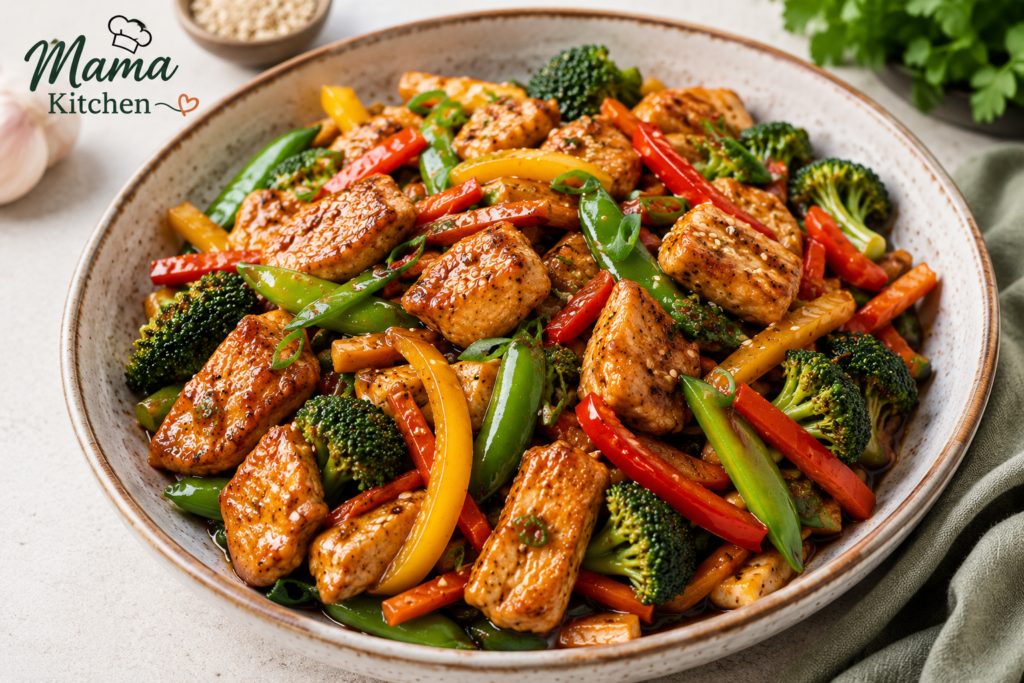
Introduction
Hi,here i feel glade to provide you my new healthy and full of protein recipe for you .If you’re looking for a meal that’s fast, filling, and seriously good for your body, this High Protein Chicken Stir Fry is about to become your new weeknight obsession.
We’re talking tender, juicy chicken strips tossed with crisp, colorful vegetables in a rich, savory sauce — all done in one pan in under 30 minutes. Whether you’re trying to hit your daily protein goals, fuel a tough workout, or just put dinner on the table without a lot of fuss, this recipe checks every single box.
This isn’t your typical takeout-style chicken stir fry. This version is specifically designed to maximize protein, minimize unnecessary calories, and still taste absolutely incredible. It’s the kind of meal that makes you feel good while you’re eating it and even better the next morning.
And the best part? You don’t need any fancy cooking skills to pull this off. If you can slice chicken and stir things around in a hot pan, you’ve got this.
Let’s get into it.
This is High Protein Chicken Stir Fry
Why You’ll Love This Recipe
There are a lot of chicken stir fry recipes out there, so what makes this one worth your time? Here’s why this recipe stands apart:
- High in protein. One serving delivers around 45–50 grams of protein, making it ideal for athletes, gym-goers, and anyone trying to build or maintain lean muscle.
- Ready in 30 minutes. From chopping board to dinner plate, this is a genuinely fast meal — no waiting around.
- One pan, easy cleanup. You’ll use a single wok or skillet for almost everything, which means less washing up.
- Beginner-friendly. The steps are simple, clear, and totally manageable even if you’ve never made a stir fry chicken dish before.
- Customizable. Swap out the veggies, adjust the heat level, or throw in noodles — this recipe is endlessly flexible.
- Great for meal prep. It reheats beautifully and stays good in the fridge for several days.
- Whole food ingredients. No mystery powders or processed shortcuts — just real food that fuels your body.
If you love recipes like our High Protein Chicken Quesadilla, you’re going to flip for this one too.
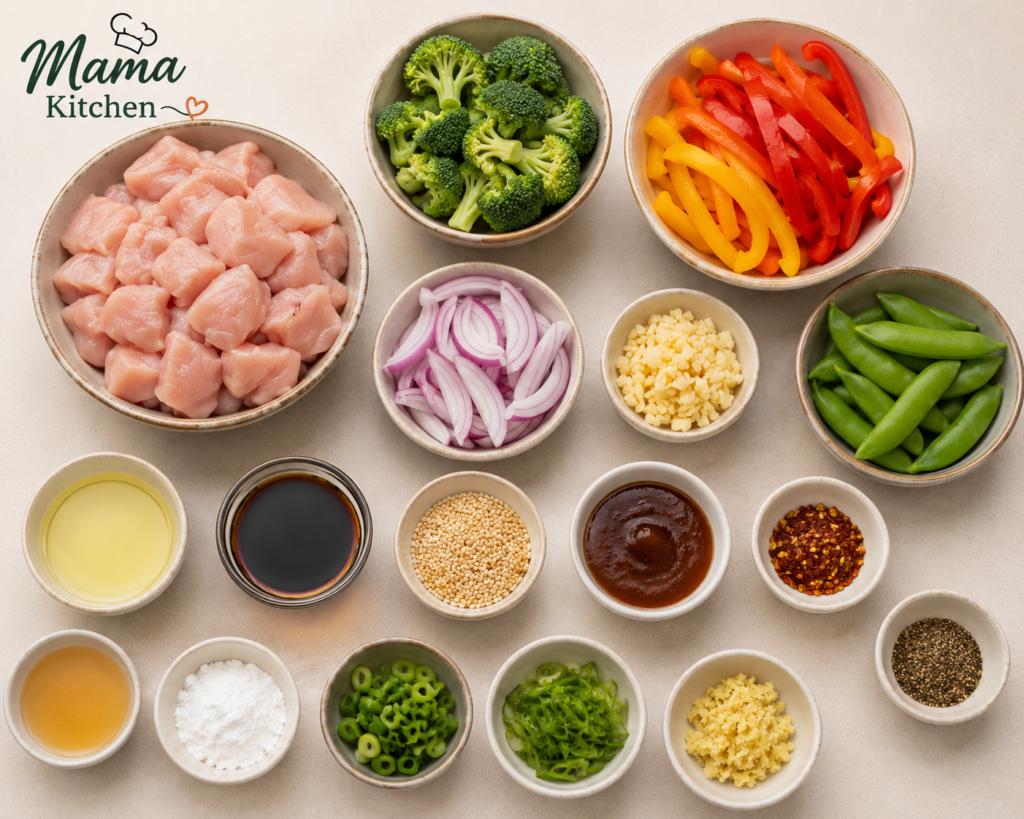
Ingredients
Here’s everything you need to make the best high protein chicken stir fry:
For the Chicken Marinade
- 1.5 lbs (680g) boneless, skinless chicken breast, thinly sliced
- 2 tablespoons low-sodium soy sauce
- 1 tablespoon rice vinegar
- 1 teaspoon cornstarch
- 1/2 teaspoon white pepper
- 1 teaspoon sesame oil
For the Stir Fry Sauce
- 3 tablespoons low-sodium soy sauce
- 1 tablespoon oyster sauce
- 1 tablespoon hoisin sauce
- 1 tablespoon rice vinegar
- 1 teaspoon sesame oil
- 1 teaspoon cornstarch
- 2 teaspoons honey or maple syrup
- 1/2 teaspoon red pepper flakes (optional, for heat)
- 3 tablespoons water
For the Stir Fry
- 2 tablespoons avocado oil or neutral cooking oil (divided)
- 4 garlic cloves, minced
- 1 tablespoon fresh ginger, grated
- 1 cup broccoli florets
- 1 red bell pepper, sliced thin
- 1 yellow bell pepper, sliced thin
- 1 cup snap peas
- 1 medium zucchini, sliced into half-moons
- 1/2 cup shredded carrots
- 3 green onions, sliced (for garnish)
- 1 tablespoon sesame seeds (for garnish)
Optional Bases
- 2 cups cooked brown rice or white rice
- 8 oz cooked noodles (for a stir fry recipe with noodles variation)
- Cauliflower rice for a low-carb version
Ingredient Notes
In the high protein chicken stir fry A few things worth knowing before you start:
Chicken breast vs. chicken thigh. Chicken breast is the leanest option and gives you that high protein count per serving. However, chicken thighs are slightly more forgiving in the pan — they’re harder to overcook and stay juicier. If you’re less confident about cooking chicken, thighs are a great backup option.
Cornstarch in the marinade. This is a classic Chinese cooking technique called “velveting.” The cornstarch creates a light coating on the chicken that keeps it tender and juicy during the high-heat cooking process. Don’t skip it.
Low-sodium soy sauce. Regular soy sauce can make this dish very salty very quickly. Low-sodium soy sauce lets you control the flavor without overwhelming everything else. According to the USDA, one tablespoon of regular soy sauce can contain over 900mg of sodium — that’s a lot in one dish.
Fresh ginger and garlic. Please use fresh here, not powders. The flavor difference is significant. Fresh aromatics are what make a stir fry chicken dish smell and taste like something from a good restaurant.
Avocado oil. You need an oil with a high smoke point because this dish is cooked at high heat. Avocado oil, peanut oil, or vegetable oil all work well. Avoid olive oil — it’ll smoke and burn before you want it to.
Kitchen Equipment for high protein chicken stir fry
You don’t need much for this chicken and vegetable stir fry:
- Wok or large skillet — A wok is ideal because its shape distributes heat evenly and gives you room to toss everything around. A 12-inch or larger skillet works perfectly too.
- Sharp chef’s knife — You’ll be doing quite a bit of slicing, so a good knife saves time and effort.
- Cutting board — Use one for the chicken and a separate one for the vegetables to avoid cross-contamination.
- Small mixing bowls — Two: one for the marinade, one to mix the sauce.
- Spatula or tongs — For stirring and tossing ingredients in the hot pan.
- Grater or microplane — For the fresh ginger.
Step-by-Step Instructions
Step 1: Prep and Marinate the Chicken
Start by slicing your chicken breast thinly — aim for strips about 1/4 inch thick. Cutting against the grain helps keep the chicken tender.
In a bowl, combine the soy sauce, rice vinegar, cornstarch, white pepper, and sesame oil. Add the chicken, toss everything together well, and let it sit for at least 15 minutes. If you have more time, 30 minutes is even better. The marinade is doing important work here.
Step 2: Mix the Stir Fry Sauce
For the high protein chicken stir fry In a small bowl, whisk together all the sauce ingredients: soy sauce, oyster sauce, hoisin sauce, rice vinegar, sesame oil, cornstarch, honey, red pepper flakes, and water. Give it a good stir until the cornstarch is fully dissolved. Set this aside — you’ll need it ready to go quickly once things get moving.
Step 3: Prep Your Vegetables
While the chicken marinates, cut all your vegetables and have them ready in separate piles near the stove. Stir frying is fast-paced — you won’t have time to chop anything mid-cook. This is called “mise en place,” and it’s the professional chef’s secret to stress-free cooking.
Step 4: Cook the Chicken
Heat your wok or skillet over high heat until it’s really hot — we’re talking smoking-hot. Add 1 tablespoon of oil and let that heat up for about 30 seconds.
Add the marinated chicken in a single layer. Don’t stir it immediately. Let it sit for 60–90 seconds to get a good sear. Then flip and cook the other side. The chicken should take about 4–5 minutes total. Once it’s cooked through and lightly golden, transfer it to a clean plate. Set aside.
Step 5: Cook the Aromatics
Add the remaining tablespoon of oil to the same pan. Toss in the minced garlic and grated ginger. Stir constantly for about 30 seconds. You’ll smell them immediately — that’s exactly what you want. Don’t let them burn.
Step 6: Stir Fry the Vegetables
Add the vegetables to the pan, starting with the ones that take longer to cook:
- First: Broccoli and carrots (2 minutes)
- Then: Bell peppers and zucchini (1–2 minutes)
- Last: Snap peas (1 minute)
Keep things moving — stir continuously or toss the pan. You want the vegetables to have a little crunch left. Overcooked veggies turn limp and lose their vibrant color. This stir fried chicken and vegetables dish should look alive and colorful.
Step 7: Add the Sauce and Chicken Back In
Pour the sauce over the vegetables. It’ll sizzle dramatically — that’s good. Stir everything to coat.
Add the cooked chicken back to the pan. Toss everything together for about 1–2 minutes until the sauce thickens slightly and coats every piece beautifully.
Step 8: Garnish and Serve
Remove from heat. Top with sliced green onions and sesame seeds. Serve immediately over rice, noodles, or cauliflower rice, and enjoy every bite of your high protein chicken stir fry.
Expert Tips for best high protein chicken stir fry
These are the small details that separate a good stir fry from a great one:
1. Slice the chicken thin and uniform. Thinner slices cook faster and more evenly. Aim for about 1/4 inch. If you pop the chicken in the freezer for 20 minutes before slicing, it firms up and becomes much easier to cut.
2. Don’t crowd the pan. This is the number one stir fry rule. If you pile too much into the pan at once, the temperature drops and instead of frying, you end up steaming the food. Cook in batches if needed.
3. High heat is non-negotiable. Stir fry chicken with vegetables demands high heat to get that slightly charred, restaurant-quality flavor. Don’t turn the heat down because it looks scary — embrace it.
4. Mix the sauce before you start cooking. Once that pan is hot and things are moving fast, you do not want to be measuring soy sauce. Have everything ready.
5. Taste and adjust. Before serving, taste the sauce. Need more salt? Add a tiny splash of soy sauce. Too salty? A squeeze of fresh lime juice or a tiny bit of honey can balance it out.
6. Cook the chicken fully but don’t overdo it. According to the FDA Food Safety Guidelines, chicken should reach an internal temperature of 165°F (74°C). Use a quick-read thermometer if you’re unsure.
Variations
This base recipe is incredibly versatile. Here are some fun ways to switch things up:
High Protein chicken Stir Fry with Noodles
Skip the rice and toss in 8 oz of cooked lo mein noodles, rice noodles, or even whole wheat spaghetti for a heartier stir fry recipe with noodles version. Add a splash of extra sauce to coat the noodles well.
Spicy Kung Pao Style
Double the red pepper flakes, add a tablespoon of chili garlic sauce, and toss in a handful of roasted peanuts. Bold, spicy, and incredibly satisfying.
Teriyaki Chicken Stir Fry
Swap the hoisin and oyster sauce for 3 tablespoons of teriyaki sauce and a drizzle of honey. Finish with a sprinkle of sesame seeds and green onions.
Low-Carb / Keto Version
Serve over cauliflower rice and replace the honey with a sugar-free sweetener. This keeps the carbs minimal while keeping all that protein.
Veggie and high protein Chicken Stir Fry with Extra Greens
Add a big handful of baby spinach or bok choy in the last 60 seconds of cooking. They wilt quickly and add a ton of nutrients without changing the flavor much.
Add Egg for Extra Protein
If you want more protein in high protein chicken stir fry then Push everything to one side of the pan, scramble 2–3 eggs in the empty space, then mix them in. This is a great trick if you love dishes like our Chicken Fried Rice.
Serving Suggestions
This chicken and veggie stir fry is a complete meal on its own, but here are some great ways to serve it:
- Over steamed white rice — The classic, simple choice. The sauce soaks into the rice beautifully.
- Over brown rice — Adds extra fiber and a slightly nutty flavor that pairs well with the savory sauce.
- With rice noodles — Light and slurpable. Great for a more casual dinner.
- In lettuce cups — Spoon the stir fry into large butter lettuce leaves for a lighter meal.
- With a side of miso soup — Warm, soothing, and a nice contrast to the bold stir fry flavors.
- Topped with a fried egg — Pop a fried egg on top and let that yolk run into the sauce. Trust us on this one.
Storage Instructions for high protein chicken stir fry
Refrigerator
Store leftovers in an airtight container in the fridge for up to 4 days. Keep the sauce-coated stir fry separate from your rice or noodles if possible — this prevents the base from getting soggy.
Freezer
This dish freezes reasonably well. Let it cool completely, then portion it into freezer-safe containers. It’ll keep for up to 2 months. Thaw overnight in the refrigerator before reheating.
Reheating
Reheat in a skillet over medium heat with a small splash of water or chicken broth to loosen the sauce. You can also microwave it in 60-second increments, stirring between each. The vegetables will soften slightly after reheating — that’s totally normal.
Meal Prep Tips
This high protein chicken stir fry is a meal prep superstar. Here’s how to make it work for your week:
Prep the vegetables ahead of time. Wash, slice, and store all your vegetables in separate containers or zip-lock bags in the fridge up to 3 days ahead. When it’s time to cook, everything is ready to go.
Make the sauce in advance. Mix a big batch of the stir fry sauce and store it in a jar in the fridge for up to a week. Use it across multiple meals.
Cook the chicken in batches. Cook a large batch of marinated chicken at the start of the week. Use it in this high protein chicken stir fry recipe Monday, then repurpose leftovers in salads, wraps, or grain bowls throughout the week.
Portion into containers. Once cooked, divide the stir fry and rice into individual meal prep containers. This makes grabbing a high-protein lunch or dinner completely effortless.
Common Mistakes to Avoid
Even simple recipes have pitfalls. Here’s what to watch out for:
Using a cold pan. If your pan isn’t fully preheated, the chicken will steam instead of sear. Give the pan a full 2 minutes to heat up before adding oil.
Skipping the marinade. The marinade isn’t optional — especially the cornstarch. It’s what makes the chicken stay tender and juicy rather than turning rubbery.
Cutting vegetables too big. Large chunks won’t cook in time during a stir fry. Everything should be bite-sized so it cooks quickly and evenly.
Not having everything prepped before you start. Stir frying moves fast — sometimes the entire cook time is under 10 minutes. If you’re still chopping garlic while the oil is smoking, you’ll burn something.
Adding sauce too early. If you add the sauce before the vegetables are mostly cooked, it’ll reduce down and become too thick and salty before the vegetables are done. Add it toward the end.
Stirring too much during the initial chicken sear. It’s tempting to constantly move the chicken around, but giving it time to sit on the hot surface is what creates that gorgeous golden crust and locks in the juices.
Overcooking the vegetables. The goal is crisp-tender, not mushy. The vegetables should have a little bite left when you serve them. They’ll keep cooking slightly from residual heat even after you take the pan off the stove.
Nutrition Information (Approximate) in the high protein chicken stir fry
Per serving (recipe serves 4), without rice:
| Nutrient | Amount |
|---|---|
| Calories | ~380 kcal |
| Protein | ~48g |
| Carbohydrates | ~18g |
| Fat | ~11g |
| Fiber | ~4g |
| Sodium | ~720mg |
| Sugar | ~8g |
Values are estimates and will vary based on exact ingredients used. For detailed nutritional tracking, use a verified tool like the USDA FoodData Central database.
This dish is genuinely high in protein thanks to the generous amount of chicken breast per serving. Protein supports muscle repair, keeps you full longer, and plays a crucial role in nearly every function of the body, according to the National Institutes of Health (NIH).
FAQs
1. How do I know how to cook chicken for stir fry properly?
The key is to slice it thin (about 1/4 inch), marinate it with a little cornstarch, and cook it in a very hot, lightly oiled pan without overcrowding. Cook until the chicken reaches an internal temperature of 165°F and has a light golden color on the outside. Don’t stir constantly — let it sear.
2. Can I use frozen vegetables for this chicken and vegetable stir fry?
Yes, but with a caveat: frozen vegetables release a lot of water as they cook, which can make your stir fry soggy rather than saucy. If you use frozen veggies, thaw and pat them dry first, or cook them separately to remove excess moisture before adding them to the pan.
3. Is this recipe gluten-free?
Not as written, since soy sauce and oyster sauce contain gluten. To make it gluten-free, swap both for certified gluten-free tamari and a gluten-free oyster sauce alternative (available at most health food stores).
4. Can I make this with chicken thighs instead of chicken breast?
Absolutely. Chicken thighs are fattier (which makes them more flavorful and harder to overcook), but they’re slightly lower in protein per gram compared to breast. They’re a great option if you want extra juiciness.
5. What’s the best way to add more protein without adding more chicken?
Great question. You can add edamame, tofu cubes, or a couple of scrambled eggs to boost the protein without increasing the chicken portion. Some people also mix in a scoop of unflavored protein powder stirred into the sauce — it sounds odd, but it works surprisingly well.
6. What vegetables work best in a stir fry chicken and vegetables dish?
The best stir fry vegetables are ones that cook quickly and hold their texture. Great choices include: bell peppers, broccoli, snap peas, bok choy, mushrooms, zucchini, baby corn, carrots, and water chestnuts. Avoid very watery vegetables like cucumber or tomatoes — they don’t stir fry well.
7. Can I make this ahead of time for meal prep?
Yes! This is one of the best meal prep recipes out there. Cook a full batch, let it cool, and divide into containers with cooked rice or noodles. It stores in the fridge for up to 4 days and reheats quickly in the microwave or on the stovetop.
8. How can I make this stir fry less salty?
Use low-sodium soy sauce as the recipe calls for, and taste before adding any extra salt. If it’s already too salty, add a squeeze of lime juice, a small drizzle of honey, or a splash of water to balance the flavors. Rinsing canned ingredients also helps reduce sodium.
9. What’s the difference between stir fry sauce and teriyaki sauce?
Stir fry sauce is typically more complex and savory — it usually contains soy sauce, oyster sauce, garlic, and ginger, and is designed to coat multiple ingredients. Teriyaki sauce is simpler and sweeter, typically made with soy sauce, mirin, and sugar. Both are delicious, but they give the dish a different character.
10. Can kids eat this high protein chicken stir fry?
Definitely! Just leave out the red pepper flakes to keep the heat level kid-friendly. The colorful vegetables make it visually fun, and the savory-sweet sauce tends to appeal to younger palates. You can serve it over plain white rice for a kid-approved dinner.
Final Thoughts
If you’ve been searching for a recipe that’s fast, healthy, genuinely delicious, and packed with protein — this High Protein Chicken Stir Fry is exactly what you’ve been waiting for.
It’s the kind of meal that feels like a reward after a long day. Colorful vegetables, tender chicken, a bold savory sauce — all done in under 30 minutes with barely any cleanup. Whether you’re cooking for yourself after the gym, feeding a hungry family, or stocking the fridge for a productive meal prep Sunday, this recipe will not let you down.
And once you make it once, you’ll realize how easy it is to adapt. Throw in different vegetables. Try it with noodles. Make it spicy. Make it mild. Add extra eggs. The possibilities are genuinely endless.
The most important thing? Just make it. Don’t overthink the ingredients, don’t worry about getting every step perfect the first time. Stir frying is forgiving, and this recipe was written specifically to be beginner-friendly.
So heat up that pan, grab your chicken, and get cooking. Your future self — with a full belly and a stocked fridge — will thank you.
If you gave this recipe a try, drop a comment below and let us know how it turned out! Did you try a fun variation? We’d love to hear about it. And don’t forget to save this recipe to your Pinterest or share it with a friend who’s been trying to eat more protein.
Happy cooking with love for your family ❤💕
2 Comments